Showing posts with label Pasta Sauces. Show all posts

Friday, March 25, 2011

Salami Sauce

I ask you, what does one do with 8 pounds of salami? Our dear friend, Fr. Guglielmo Lauriola was being gifted with so much salami, among other comestibles, that he insisted I take some off his hands. He said refrigeration would make it hard. Okay, so I stored some in a cool dark place. We're trying to watch our salt intake, so it needed to be diluted in some way and not just eaten in chunks, which we have been known to do. That's when I came up with the salami sauce idea. Surely some Italian, somewhere over the centuries, must have resorted to this type of use for salami.


Ingredients:

1 salami chub

1 medium yellow onion

1 oz. dried porcini mushrooms

3 cloves of garlic

1T extra virgin olive oil

1t dried basil

1 can Del Monte tomato sauce

1 large can chopped tomatoes

1 large can of water (by proportion not measurement)

1/4C chopped Italian parsley


Directions:

Since the salami was difficult enough to peel, I decided to go with the big guns and use the Cuisinart. If the salami is on the drier side, you will really need a processor of some sort. Otherwise thin slicing and mincing will work.

Finely dice the onion and mince the garlic. Set aside, then heat the olive oil in a 6 quart pot over low heat. Saute the onion in the oil until translucent, then add the basil and garlic and mix thoroughly.

The salami can be added and stirred into the mixture. Saute for 2 minutes over a medium high heat to try and caramelize. Then lower the heat to a simmer.

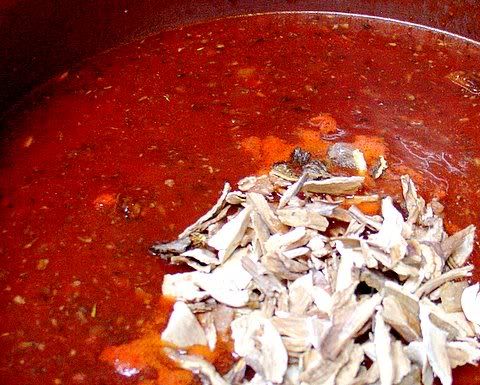
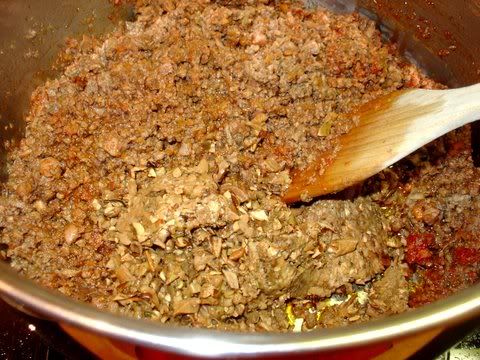
Crush and add the dried porcini, then stir to incorporate and scrape the bottom of the pot clean so nothing burns while you simmer the sauce.

Add the chopped tomatoes. If you can't find any, use stewed tomatoes as a reasonable substitute. Add the small can of Del Monte and stir ingredients together.

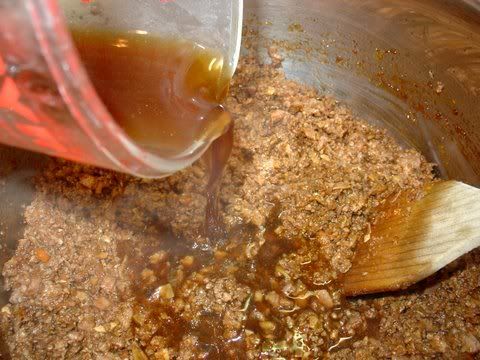
The sauce is thick now so thin it out so it will be able to cook for enough time to create a nice depth of flavor. I always add water; never liked wine in pasta sauce. It will evaporate during the cooking process. Don't be timid add a large can of water.

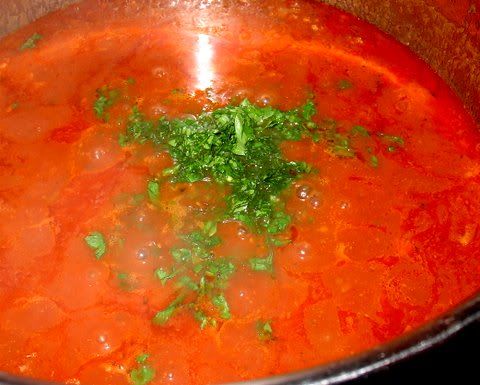
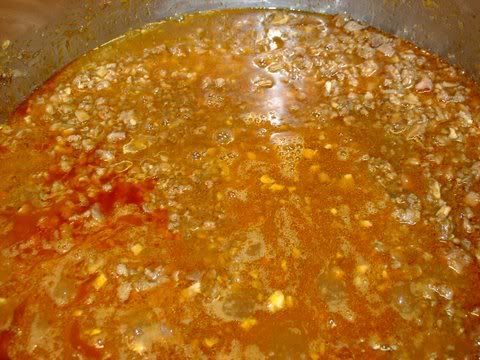
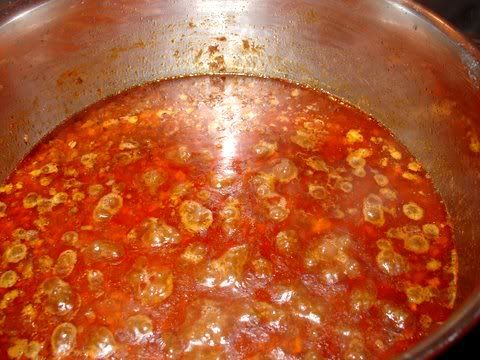
After adding the water, add the chopped parsley, stir, cover the pot and simmer for 30 minutes. Check the pot every 10 minutes and stir, so nothing sticks to the bottom and burns. Uncover and cook until you like the consistency.

Saturday, February 19, 2011

Sausage & Olive Tepanade Pasta

Collecting more condiments than I can possibly use was the impetus for this recipe. My jar of green olive tepanade from Italy was going to get stale dated if I didn't start using it soon.


Ingredients:
4 Italian sausage
1 small yellow onion
2t dried basil leaves
1/4t hot red pepper
1 can stewed tomatoes
2T green olive tepanade
extra virgin olive oil
1lb. pasta
Freshly grated Romano cheese 

Directions: Start by placing a 4-6 quart pot full of water on the burner and bringing it to a rolling boil for the pasta. I usually start the water after I've prepped the ingredients for the sauce.

Saute onion slices in olive oil drizzled lightly into a pan large enough to hold 1 lb. of pasta plus the sauce ingredients. Add the basil and red pepper.

Add garlic to the onion and move off heat or they'll burn. Now add chopped sausage over medium high heat and saute until caramelized a little bit.

After the sausage, onion and garlic have cooked together and are fully cooked, add the olive tepanade. Black olive tepanade could be substituted.

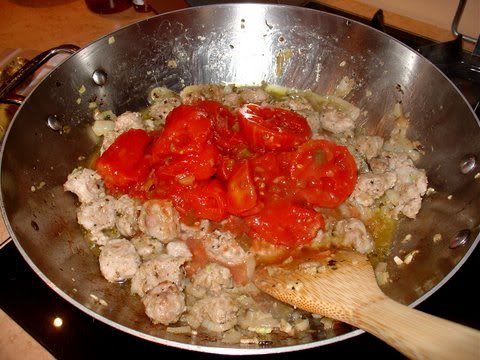
Add the stewed, or of you prefer, solid packed tomatoes and break them up. I do what Nana did and squish them in my hand; a tool I never misplace!

Cover and cook for 15-20 minutes until the tomatoes break down further. If the mixture looks dry, add a little water before simmering the sauce.

When the sauce is done, cover and shut off the burner. Cook the pasta al dente, drain, then place it in the sauce and stir over a low flame 2 minutes.


After the sauce has absorbed into the pasta it's ready to plate. you may add some cheese to the pasta before plating, just like Nonna (Nana's mother, my great grandmother did), but I really prefer to add it after plating. I like the way it looks. I truly believe Nonna added the cheese before bringing the pasta to the table, as a way of conserving the use of a very expensive imported cheese. Even when pasta was served family style at Nana's table, there was only one bowl of grated cheese available for everyone to use,  and Papa "read you the riot act" if you took too much!

Wednesday, October 27, 2010

Cremini Mushroom Sauce

What does one do with a pound of mushrooms that will not last for another few days? Make a mushroom pasta sauce is my quick answer. We have no family recipe for mushroom sauce, so I developed this sauce out of necessity, since when I first lived on my own, I had many vegetarian acquaintances. It is perhaps 20 years or more since it was last prepared and it has a few new additions, but makes for a nice basic vegetarian pasta sauce.


Ingredients:
1 1/2 lb brown Cremini mushrooms
2 large yellow onions
2T extra virgin olive oil
1 28oz can of tomato puree
2 cans of water (this is by volume, use the can)
1/2 oz dried porcini
2T dried basil
1t dried thyme
3 large cloves of garlic
Directions:
Chop the onions and place in a non reactive 6 qt pot over medium heat along with the olive oil, and saute until the onions are translucent, adding a little salt to help them release fluids. Roughly chop the Cremini mushrooms and pulse in a food processor or finely chop with a knife.
Add the mushrooms and herbs to the cooked onions and saute for a few minutes more until the mushrooms have also lost some fluid. You may now add the can of tomato puree and stir it into the mushroom mixture. Cook while constantly stirring for a few minutes to caramelize the puree and produce a richer tomato taste.
Add the water and stir again Now you can add minced raw garlic and crushed porcini mushrooms. Bring the sauce to a low boil, scrape the bottom of the pot to make certain that nothing is sticking and reduce heat to a simmer. If the sauce looks like the consistency that you prefer, put a lid on the pot and simmer for 10-12 minutes before stirring. If the sauce looks too thin to you, leave the lid off the pot and stir every 10-12 minutes. The process of evaporation will thicken your sauce. You are looking for a rich brownish red color to indicate that the sauce has fully cooked. The sauce should be ready in less than an hour from the time you start the simmering process.

Notes:
For this particular batch of sauce I held back 10 mushrooms and thinly sliced them for a textural contrast in the sauce. Garlic may be sauteed, but I added it raw. The porcini are icing on the cake and if you don't have them, leave them out. If you do use them, you may wish to reconstitute them with hot water and to add the water into the can for part of the water requirement for this recipe. Remember to use the can for adding in the water as the proportion is by volume.

Friday, April 10, 2009

Bolognese Meat Sauce


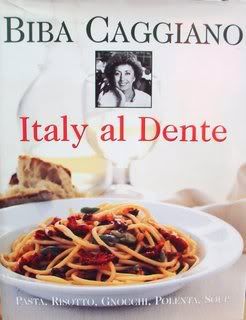
This is a very rich tasting meat sauce that I have developed after reading countless Bolognese sauce recipes. Biba Caggiano has been my greatest influence even though her books contain quite a few different recipes for this sauce. I like to add chicken livers for the depth of flavor they bring to the sauce, but I know for a fact that Biba does not care for them...I asked her one night at her restaurant in Sacramento.

Ingredients:
1/2 lb ground veal
1/2 lb ground chuck
1/4 lb ground pork
4 oz prosciutto
1/4 lb chicken livers
1 medium yellow onion
3 medium celery stalks
2 medium carrots
3T triple concentrated tomato paste
1 1/2 oz dried porcini mushrooms
1C hot water
1C Cabernet Sauvignon
3/4C whole milk
3T extra virgin olive oil
3T unsalted butter
3C porcini broth (3C water, 2 porcini bouillon)
water drained from the porcini

Directions:

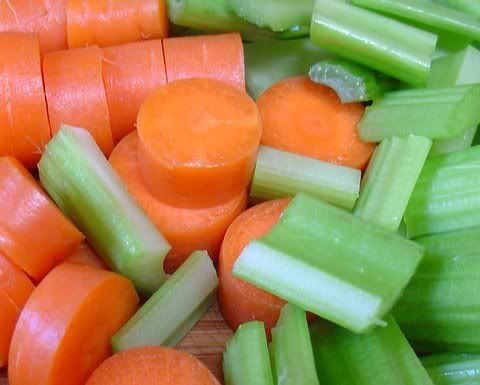
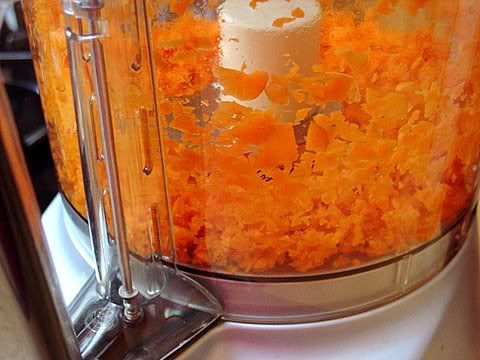
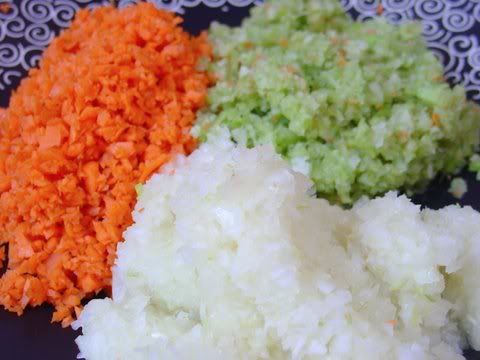
First thing to do is prep your vegetables. Melt the butter in the olive oil using a heavy bottomed stock pot over medium heat. When the butter is frothing add the minced onions, celery and carrots to saute for 5 -7 minutes. I didn't bother mincing, but pulsed them in a food processor until they were finely chopped. With a recipe that has so many ingredients it's nice to not have to mince everything by hand, although I do enjoy doing that most of the time.
Now that the sofrito has cooked down, add minced prosciutto and continue sauteing over a medium heat until the mixture is looking well cooked. While you are waiting for the prosciutto to cook, add 1 cup of hot water to the dry porcini that have been placed into a bowl and set aside.

Add the veal, chuck and ground pork to one half of the pot and saute over high heat until you have broken down the meat into very fine pieces, then mix with the vegetables and saute longer until you start to get caramelization on the pot. Next add the chicken livers and saute them in an open space in the pot until they firm up. There should be enough fat to do this, if not add olive oil.

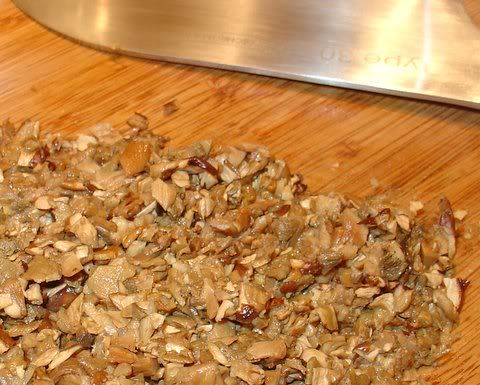
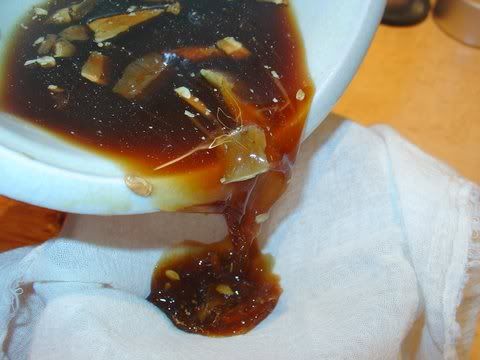
Remove the cooked liver from the pot and mince it, then return to the pot and stir all the meat until it browns a bit. Next comes the wine. I used Cabernet since it is a medium bodied red and it was on hand, but many recipes use a dry white or Chianti. Because this recipe is Bolognese a Sangiovese from Emilia Romagna would be perfect. Cook the meat until the wine absorbs completely. While you wait, squeeze the porcini dry, until most of the liquid remains in the bowl, and mince the mushrooms. Drain the leftover liquid in either a small strainer or through a cheesecloth to remove sand or dirt.
Now caramelize the tomato paste in the pot and mix with all the meat. If you cannot find the triple concentrated tomato paste in a tube, use a very small can of domestic tomato paste.

Add the minced porcini to the meat mixture once the wine has completely reduced, then saute for a few minutes. The next step is to add the drained porcini water (about half a cup), 3 cups of water and 2 porcini bouillon cubes. Turn up the heat and when the sauce is boiling, turn down the sauce to a simmer, cover the pot partially to allow the steam to escape and reduce the sauce. In the absence of porcini bouillon you can substitute chicken broth.

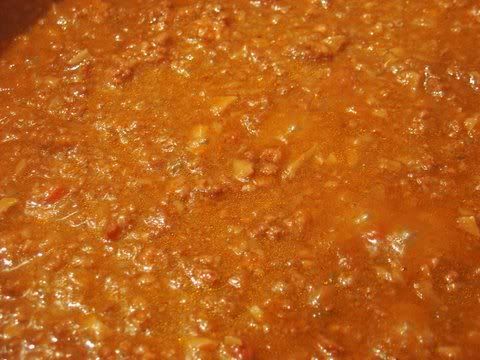
This can take up to 2 hours, so check every 20 minutes and stir. After this process, add the milk and continue to heat for another 15 to 20 minutes until the sauce completes its final reduction. You should have a nutty brown sauce that is perfect for making Lasagne Verdi Bolognese. To use this as a sauce for pasta, I would most likely add more tomato paste or even a can of sauce.