Showing posts with label Side Dishes. Show all posts

Tuesday, January 27, 2015

Farro and Wild Rice

DSC07050


I believe I have become an expert at using up leftover wild rice, when I see small amounts left in the package. It can add flavor and texture to soups and now it can work well at improving eye appeal when mixed with farro as a whole grain side dish. Since they both take the same amount of time to cook, they make great partners.

Ingredients:

1C farro

1/2C wild rice

2 1/2C water

2 porcini bouillon cubes

1oz dried porcini


DSC07031DSC07033 

Boil the water over a high flame and add the bouillon cubes to flavor this side dish. Rinse the grains, drain and add to the boiling broth.

DSC07035DSC07038

Bring the broth to a rolling boil, then add the dried porcini mushrooms and stir thoroughly. Cover the pot with a lid and lower the heat to a simmer. Cook for 30 minutes, check to see if all the liquid has been absorbed. Continue simmering until the grain has fully absorbed all the broth and when it does remove from heat and let sit for 10 minutes. Add a pat of butter if you’d like and fluff up the grain before serving.

Wednesday, April 30, 2014

Vegetable Pesto Lasagne

DSC07224

For years I've been thinking about trying to make a green vegetarian lasagne and this  Easter I finally gave it a go. I wasn't certain whether either the broccoli or zucchini would be flavorful enough on their own, so I used  both of them and for even more flavor I added pesto to the mix. This was then layered with béchamel, because a tomato based sauce would certainly overpower the already delicate flavors.

Ingredients:
1 box flat lasagna sheets
2 small heads of broccoli
3 medium zucchini
2C chicken broth (or sub vegetable)
2T olive oil
3T butter
4T pesto
salt & pepper to taste
2C freshly grated parmigiano
2C coarsely grated Pesto Gouda
1C ricotta
1 egg
1T minced parsley
3C béchamel sauce
     4T butter
     4T flour
     3C whole milk
     grated nutmeg to taste

DSC07158DSC07162  
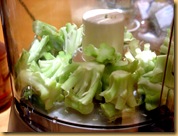
After putting the raw broccoli into the food processor, I blanched it in the chicken broth so the color would stay bright green. After draining the blanched vegetable I added 2T of thawed pesto that I had made ahead of time and frozen. Both salt and pepper were added to boost the flavor.

DSC07176DSC07165 
Since the zucchini was more delicate in  both texture and flavor, it was shredded and sautéed in butter, with a little olive oil to keep it from smoking, while I did a quick sauté. Pesto was again added after draining.

DSC07186
Next came the ricotta mixed with the egg and parsley. In truth, I think skipping this layer would actually improve the dish, so I plan on eliminating it next time I try this lasagne. However, it has inspired the idea to try a ricotta pesto lasagne with a tomato based sauce.

DSC07187DSC07190
A large pasta pot was being filled with water and brought to a boil. Before the béchamel was started, 4 pasta sheets were added and boiled until tender. If I have noticed anything about Italian cooking in Italy, it is that lasagne  is never served al dente like other pasta. The sheets were taken from the pot with tongs, so they could drain and be placed on a cotton dish cloth. When waiting for the pasta to cook, you can grate the cheese.

DSC07179DSC07181
Next came the béchamel. Butter was added to a pan and melted at a low heat. After adding the flour and whisking the two ingredients together, the heat was raised to medium temperature, while the raw flour was being cooked for a few minutes, just short of turning color. The milk was then slowly whisked into the mixture and the whisking continued until the béchamel thickened to a more than heavy cream stage. Freshly grated nutmeg was added when the heat was turned off and the pot was covered to prevent a skin forming on the sauce.

DSC07194
The lasagna dish was buttered and the first layer of pasta went on the bottom; a layer of vegetable, in this case zucchini, was added next, along with a light layer of the grated pesto cheese.

DSC07197
A layer of béchamel and a light layer of parmigiano were added.

DSC07199DSC07203
More pasta, was added with a thin layer of the ricotta mixture and some of the shredded pesto gouda.
DSC07205DSC07207DSC07208
Layers of pasta and broccoli with the pesto gouda, along with béchamel and parmigiano  were alternated with the zucchini and ricotta layers, until the pan was filled. The last layer was merely béchamel and parmigiano.

DSC07221
The completed lasagne was placed into a 325 degree preheated oven for about an hour. The top layer browned nicely and let me know when to take it from the oven, although technically I just turned off the oven and left it inside, since other components of the meal were still in need of some attention.

Monday, November 28, 2011

Mashed Potatoes

So basic, I almost forgot about these, but there are a few things to say about variations on this theme. I’ve recently made a change in my approach of cutting down on the butter.

DSC04752

Ingredients:

Russet potatoes
butter
garlic powder
mascarpone cheese
flaked salt
milk (optional)

When I first made mashed potatoes, butter and salt was all I used. Next, low fat cream cheese replaced half the butter and that worked well for many years because the cream cheese added a tangy taste that I liked. Then came the KitchenAid mixer experiment where it became apparent that you could get a really pasty texture on the potatoes. For some reason, I saw that as an improvement rather than a flaw. Now that texture reminds me of the “instant potatoes” of my childhood; that’s probably why I liked it.

Within the past few years I’ve gone back to mashing the potatoes by hand and replacing the cream cheese with mascarpone, a cheese tasting very buttery with fewer calories than butter. When I’m really in the mood I might add freshly grated parmigiano and pretend I’m in Italy.

Directions:

Peel the potatoes. Allow 1 medium russet per serving, then boil in a pot large enough to allow all potatoes to be covered by the water. Remove from the heat when easily pierced with a fork. Drain, place in a bowl or back into the pot and mash. Add a small amount of milk to smooth them out, then add butter (I use half a cube for 8 potatoes), half a carton of mascarpone cheese, garlic powder and salt. Use a very light hand as it is easier to add than to reduce these ingredients. Taste and adjust for salt. That’s it.

Monday, August 1, 2011

Porcini Flavored Polenta with Wild Boar Sausage

I admit to buying the sausage, because making them would mean more freezer space and I'm out of that at the moment. Besides I really like going to Gourmet Corner to see what's new in French imports. This polenta recipe grew out of a need to serve something simple with the sausage.


Ingredients:
1C coarse polenta
5C water
3 Porcini bouillon cubes
1/4 cube butter
1 1/2C freshly grated Parmigiano

Directions:
In a large pot, bring the water to a boil and add the bouillon cubes. Stir until the cubes dissolve. Then measure out the coarse ground polenta and grate the cheese.


Slowly pour the corn meal into the broth, and whisk it the entire time so you do not form lumps in the polenta. Keep whisking as the polenta cooks.


You will have to whisk the polenta until it thickens considerably. It is still very thin in this photo as is evidenced by the bubbling porcini broth. You want it thick and stiff.


 In this photo it is only beginning to thicken, so when it looks like this, stir it for at least 10 minutes longer over high heat, then lower the heat and keep whisking.


When it is finally thick, stir in the butter which makes it considerably creamy in taste. You may sub Mascarpone cheese for a little less fat.


 Add the grated cheese and whisk or stir it into the polenta to complete the dish. Plate and top with sausages. For a vegetarian option top with roasted vegetables.


Thursday, July 21, 2011

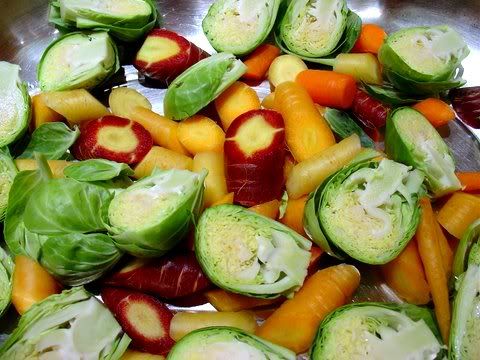
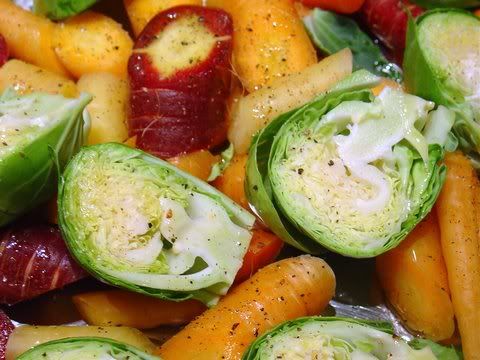
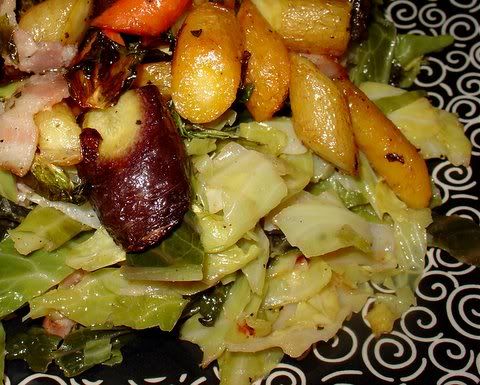
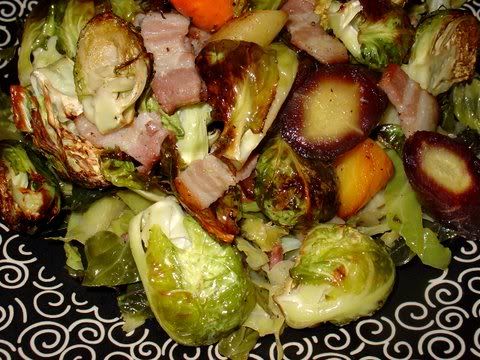
Roasted and Stir Fried Winter Vegetables


This may very well be the only recipe I have ever put together because I just had to photograph the ingredients. When I first found this red savoy cabbage at Rainbow grocery I thought it was incredibly beautiful. Then, when placed next to the bunch of multi colored carrots, the notion of developing them into a still life subject took form. The Brussel Sprouts (yes, I know they are really Brussels Sprouts, but I'm too old to change) were added for their shape and brighter color.


Ingredients:
1 small bunch of multi colored carrots
1 small red Savoy cabbage
6 Brussel Sprouts
1T olive oil
3 strips of thick cut bacon
salt & pepper to taste

Directions:
Wash all the vegetables and cut carrots on a diagonal and Brussel sprouts in half lengthwise. Preset oven to 400 degrees and place the vegetables into a roasting pan.

Drizzle the olive oil over the vegetables, add salt and pepper, then mix to coat the vegetables and place the pan in the oven for 20 minutes.


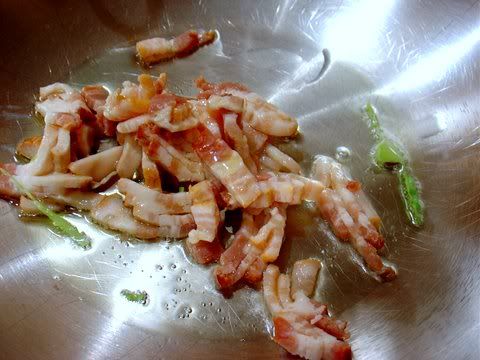
Slice the bacon and cook until rendered so the bacon grease can be utilized to saute the cabbage.


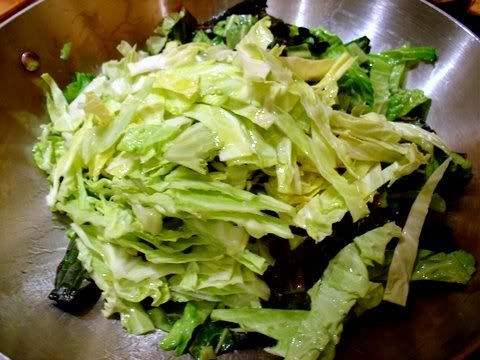
Add the shreaded cabbage and saute, then cover the pot so the residual water left from the washing will steam the cabbage until it is limp.


Layer the cooked cabbage onto the plates, then remove the roasted vegetables from the oven, stir once more, adjust for perfect seasoning and add to each plate.


Tuesday, December 29, 2009

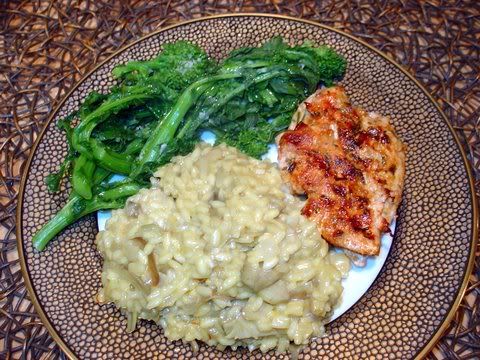
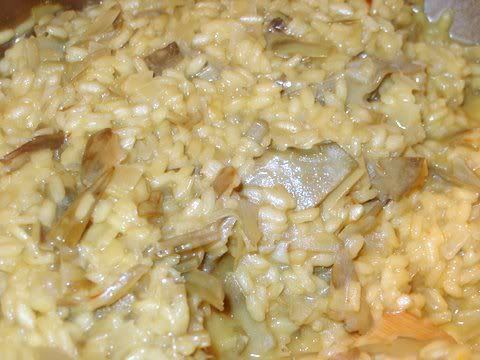
Saffron Artichoke Risotto

As the owner of at least 6 books devoted entirely to the subject of risotto, I know there are many recipes, but this was developed when only pecorino cheese was available.


Ingredients:
2 cups arborio rice
8 cups chicken stock
1 cup dry white wine
1 medium yellow onion
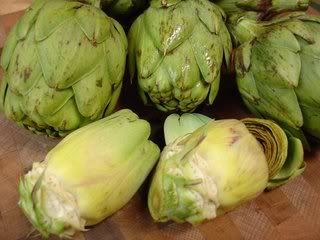
12 small fresh artichokes
1 large pinch of saffron threads
3T extra virgin olive oil
1 cup freshly grated Romano cheese
1 half lemon


Cooking Directions:
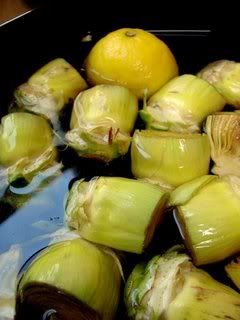
Peel the artichoke tough outer leaves until the flesh looks yellow green in color and the resistance is weaker than when you started peeling. Cut off the top 3rd and cut lengthwise, soak in acidulated water.

Heat olive oil in a 6 quart nonreactive saute pan over a medium-high flame.

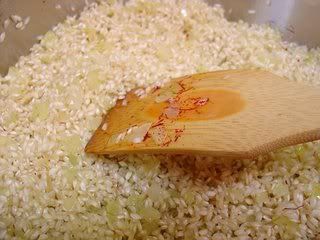
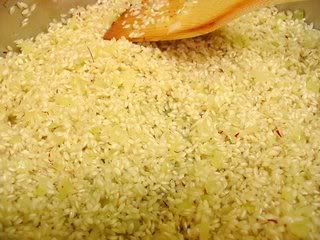
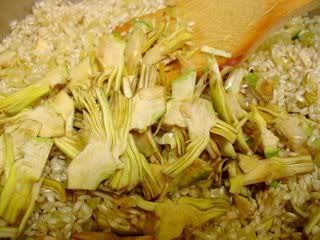
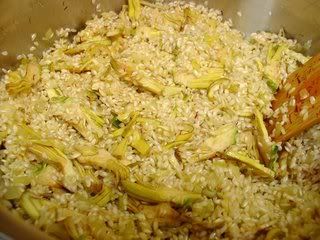
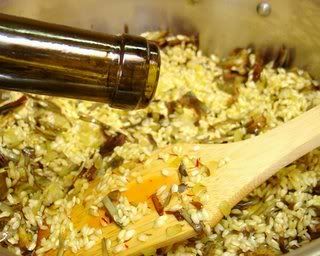
Add finely chopped onion and when the onion is translucent, add the rice, saute, add the saffron, stir, then when the rice looks opaque lower the heat to medium, add thinly sliced artichoke hearts, stir, then add the wine.
After the wine has cooked down, start ladling in the chicken broth one cup at a time until it is completely used or until the risotto is cooked al dente.
Take off heat, add the Pecorino Romano, stir until melted, plate and serve after letting it rest for 5 minutes.