Showing posts with label Preserves. Show all posts

Sunday, February 8, 2009

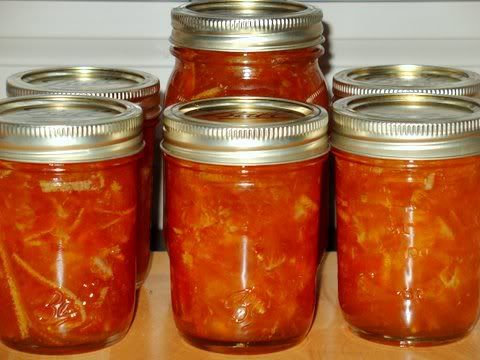
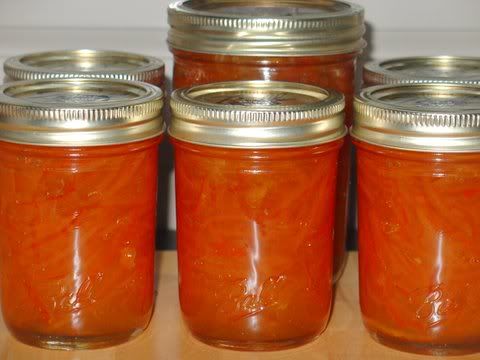
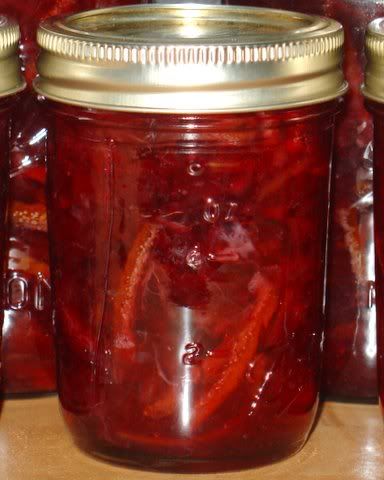
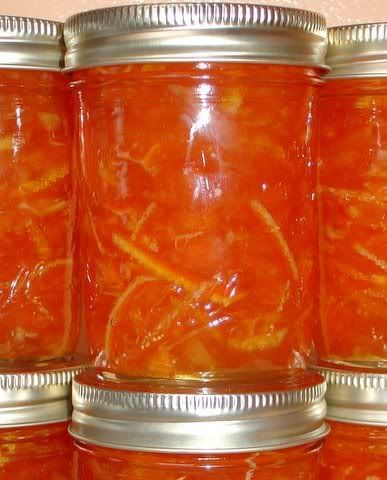
Cara Orange Marmalade

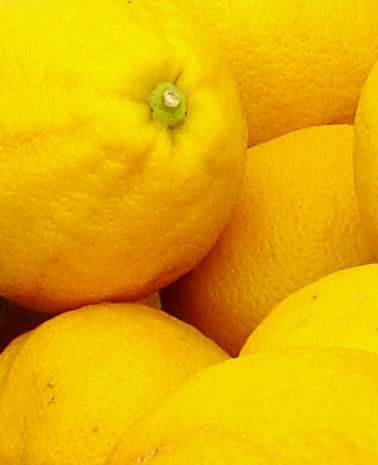
At this time of year, it is quite difficult for me to pass up buying Cara oranges, the "sport" developed from a navel orange. One would expect it to taste the same as a navel orange, but the taste is as distinctive as the color. It is a low acid, mildly sweet fruit with the most beautiful orange pink flesh. After using one in a salad, it was time to experiment with preserving them.


Ingredients:
8 large Cara oranges
6C sugar
2T raspberry champagne vinegar
1C Moscato wine (or any leftover dessert wine, even water)

Directions:
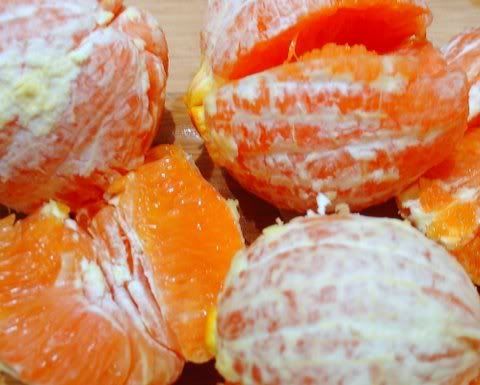
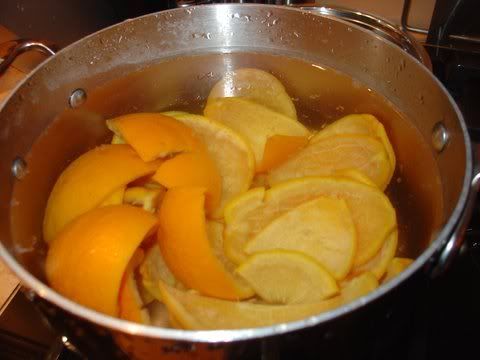
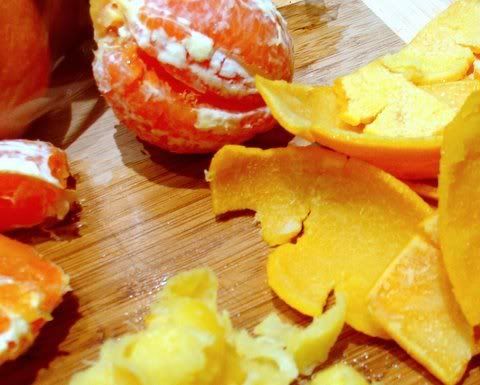
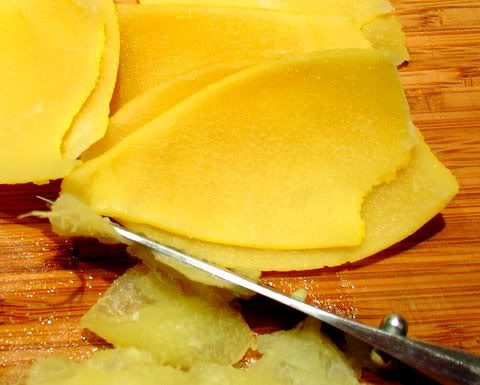
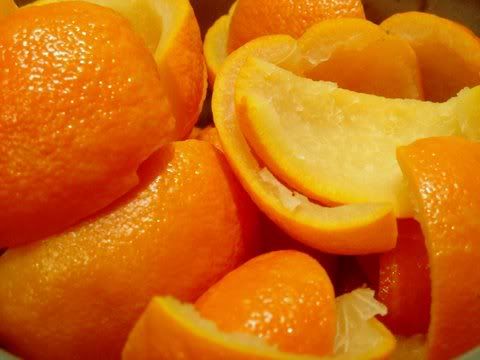
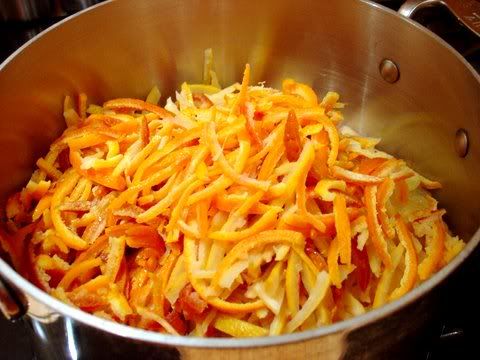
After scoring and peeling the oranges, place the peels in a pot of water and boil for an hour. This makes the pith quite soft and enables you to scrape it off of the peel without much trouble. Skipping this step and leaving the pith on the peel will result in a more bitter taste and less appealing look.
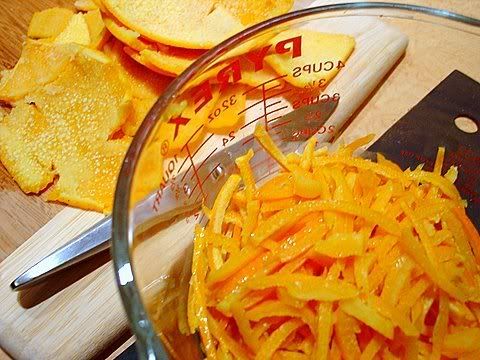
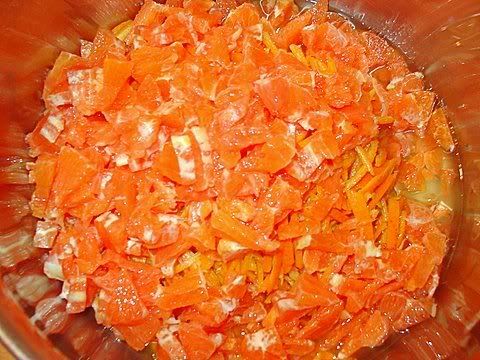
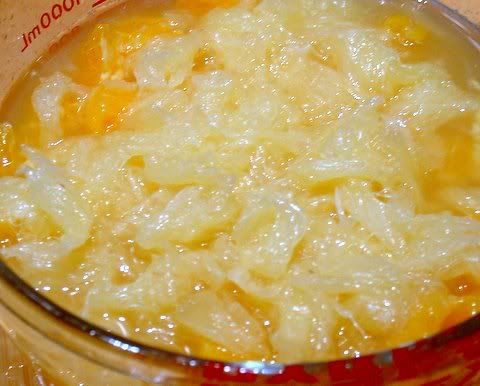
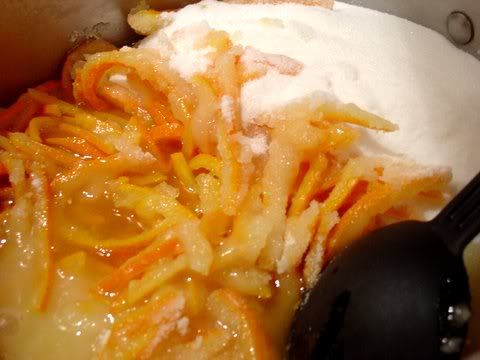
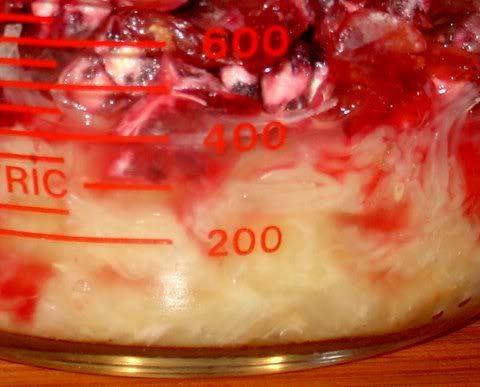
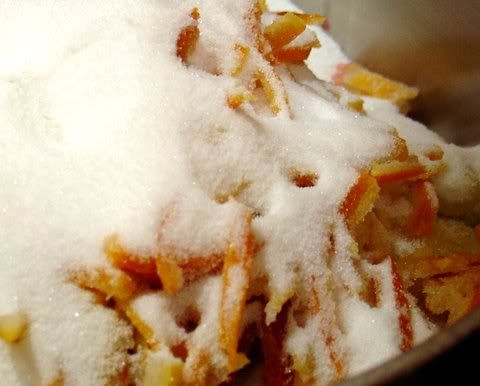
When you have cooled down the peels with cold water and scraped off the excess pith, slice the rind as thinly as you possibly can. Separate the orange segments and cut into small pieces. Place them in a measuring cup so you know how much you have and place them in your 8 quart pot. Add the wine and sugar to the pot. The reason you are measuring the fruit is that you should be using equal parts sugar and fruit for a good outcome to your marmalade. The oranges I selected made about 6 cups worth of fruit so I list 6 cups of sugar in this recipe. Please adjust the sugar amount if needed.
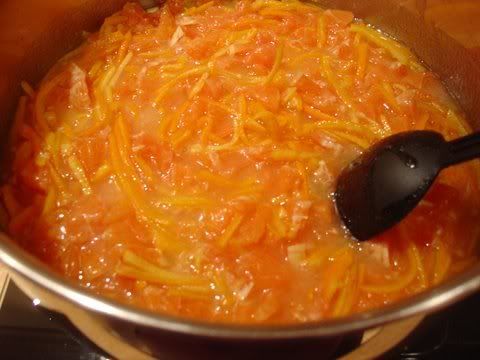
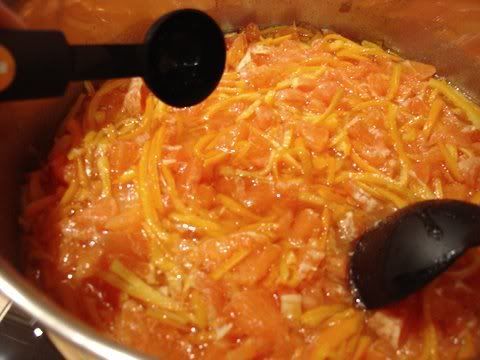
Stir the fruit, wine and sugar together and add in the vinegar. Since the Cara orange is lower in acid than come other citrus, it seemed prudent to add in a vinegar to this recipe. I always make sure it has 6% acidity, but it can be any vinegar you choose. As soon as I finish my bottle of raspberry flavored vinegar, I plan to keep champagne vinegar on hand for this type of use. Set the burner on high and stir down the marmalade until it bubbles so much you cannot stir them out. This should be the setting point. However, I added about 1/3 package of pectin to this batch because it needed it. For longer storage and better preservation of flavor, after placing the marmalade into sealed jars, put them into a water bath for 10- 15 minutes.
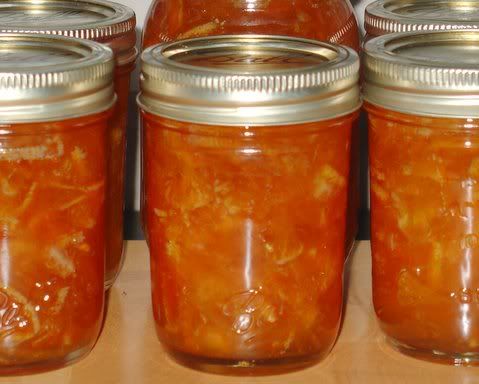
This recipe made 6 half pints of marmalade.

Monday, July 7, 2008

Apricot Sauce

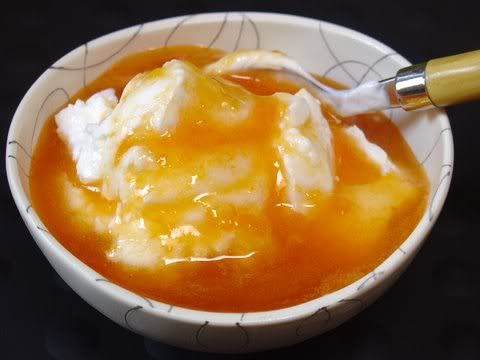
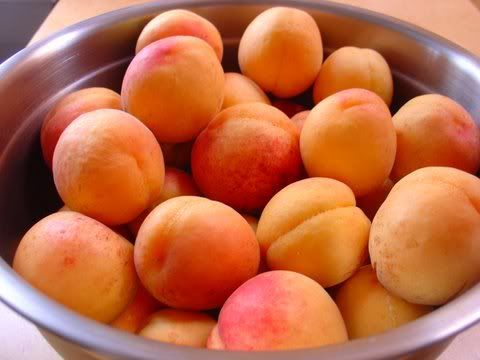
There are so many preserves piling up around here, I either have to learn to give some away, or I need to use them more rapidly. Last week, 5 found a new home, but since there are still more jams than I can use in several years, this batch of apricots from our tree became sauce. So far it's wonderful on yogurt and I plan to try it on ice cream next, or even make it into a sorbet.


Ingredients:
12C peeled and pitted apricots
10C sugar
1/4C raspberry champagne vinegar


Directions:

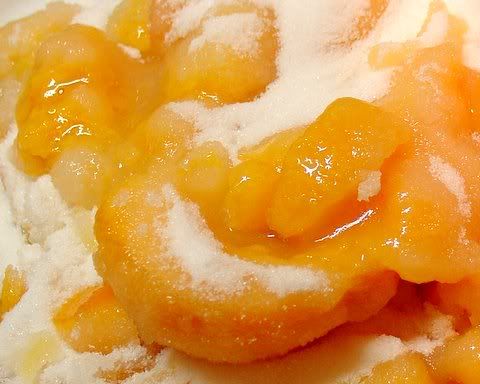
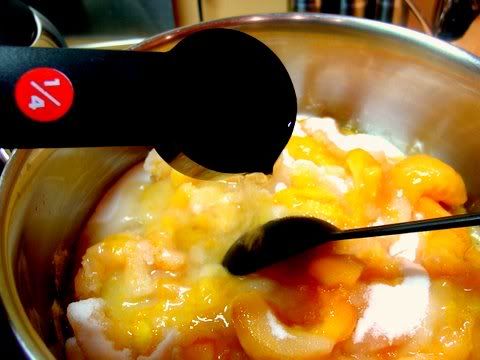
Place the peeled and pitted apricots into a non reactive 8 quart saucepan over medium heat, then stir in sugar and add the vinegar. I subbed vinegar for lemon and believe this is a great way to use up and over abundance of flavored vinegars (although few other folks would probably have that problem).

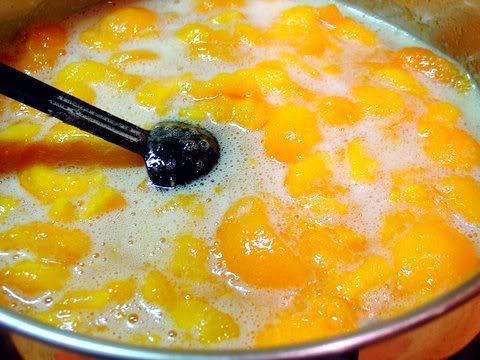
After adding the vinegar, bring the heat up to high and stir until you come to a rolling boil. At this point I used my immersion blender to puree all the fruit for a smooth sauce. Keep stirring until you can no longer stir down the bubbles.

I really like the taste of the "scum", it seems less sugary and more fresh fruity to me, so when I skim off the foam, I save it. Leaving it in is not a good option because the bubbles become smaller and then too much air is left in your canned preserve. So skim off the foam until you have just the sauce left. Place in hot sterilized jars with lids and screw caps and place in a hot bath for 10 minutes if you feel that is appropriate. I skipped it this time.

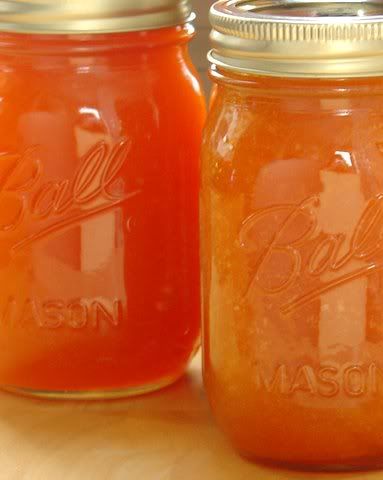
From a lovely fruit to a lovely jar of preserves, worth the work!

Apricot and Mixed Berry Jam

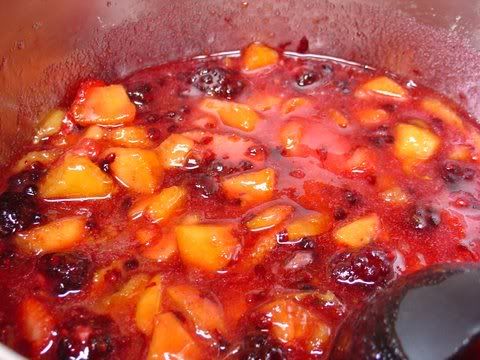
Because of preserving, I have come to understand that I'm not that precise when it comes to recipes (formulas), so I will rarely get to name a concoction as a jam since I never know whether it will actually jell. This recipe includes pectin, and even with only half a package, I am confident that it is not a "sauce" as so many of my preserves have become.


Ingredients:
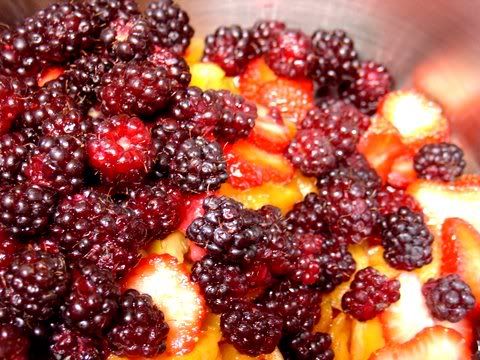
2C blackberries with a few strawberries (I only had 8)
2C apricots
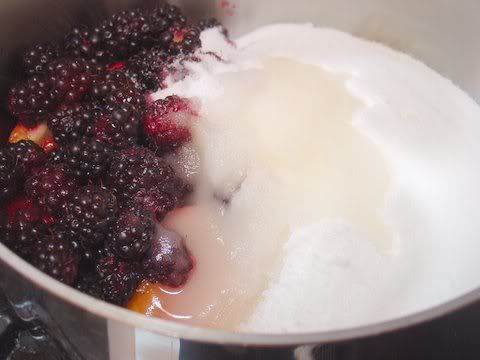
3 1/2C sugar
1 1/2T raspberry champagne vinegar
1T white balsamic vinegar
1/2 pkg pectin

Directions:

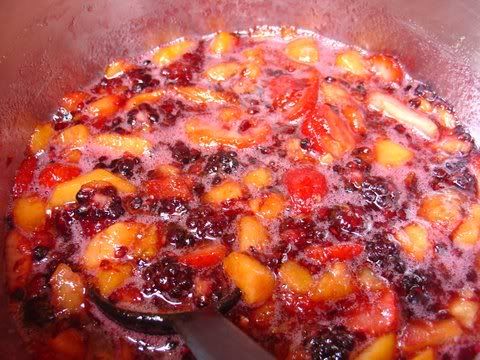
Place the fruit into a 4 quart, non reactive pan, add the sugar, add the vinegar, or lemon if you prefer and start stirring over a medium flame. Most berry or apricot recipes require lemon, but not having any on hand, I decided to add a vinegar for the acid. Since I believed I needed a 6% vinegar and the raspberry champagne was 6 1/2%, I decided to use some white balsamic too, although the bottle did not identify the acidity, I believe it was around 5%. I doubt it added much to the flavor.

After the ingredients have mixed well, raise the heat on the stove top to high and bring the fruit to a rolling boil, after adding the pectin. I decided to use an immersion blender on this preserve. After the jam has boiled, pack into sterilized jars and seal. I got lazy on this one and did not do a 10 minute water bath. When I first learned to can I always skipped the water bath processing, since I was always making jams and pickles, two of the least worrisome of canned products.

Tuesday, March 11, 2008

Bergamont and Navel Orange Marmalade

Witness my last try at using Bergamont oranges for this season. We have more marmalade than we can use already, but my buying frenzy of the Bergamonts made this recipe necessary. The blood orange version was so good, it's just hard to beat, but if you never tasted a Bergamont marmalade, this one would be a good introduction for the purist.


Ingredients:
6 medium navel oranges
5 large Bergamont oranges
6C sugar

Directions:

Each of my marmalades follow the same instructions: peel rinds from the fruit (scoring the exterior into vertical 4ths with a paring knife works best for me), boil them, scrape off pith, then slice as thin as possible. My knife skills are improving by leaps and bounds, thanks in part to making marmalade.

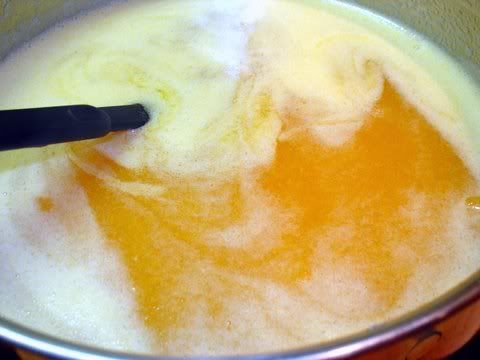
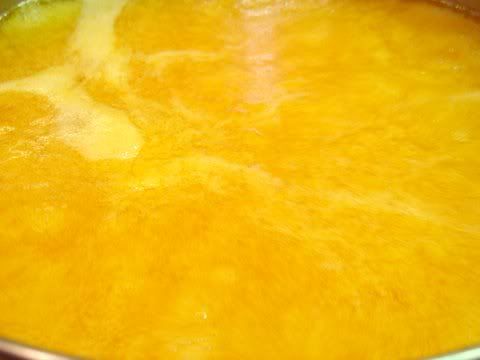
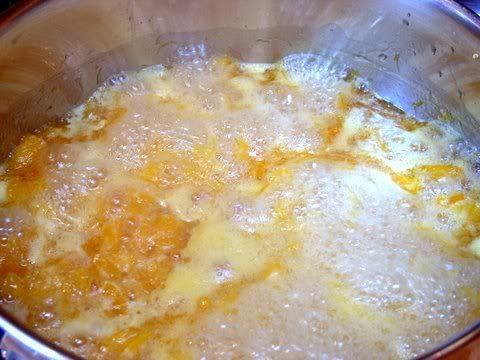
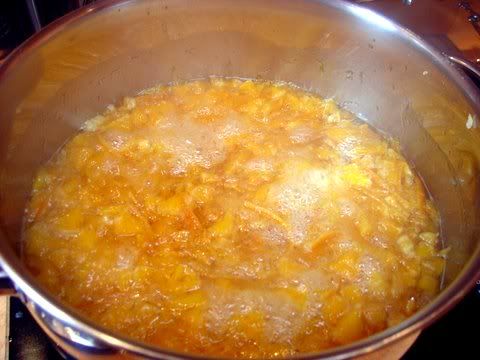
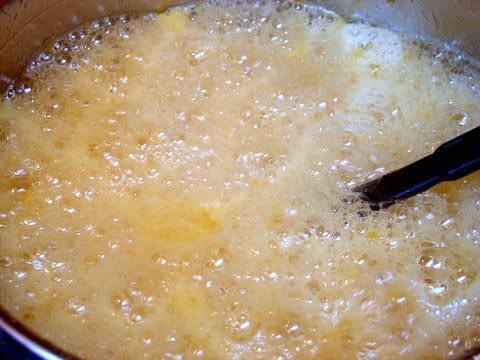
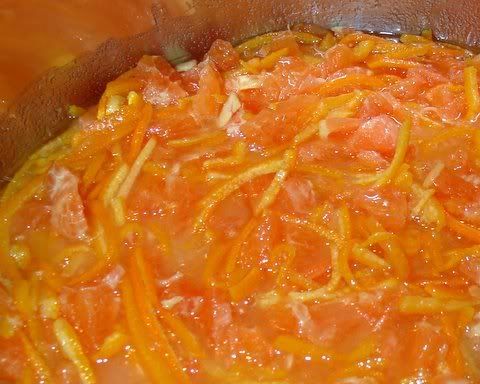
These photos illustrate an important concept for home canning. The 1st shows the preserve boiling away, but after stirring, the 2nd illustrates that the bubbles backed down, indicating that the fruit has not yet reached a setting point (the ability to firm up without added pectin). There is so much natural pectin in citrus fruit that it doesn't need pectin if it is brought to a "rolling boil" that will not stir down, as seen in the 3rd photo.

Again, as with all the other marmalade recipes, combine an equal portion of sugar to the fruit pulp, juice and rinds that you have measured. In this particular recipe, I only used 2 navel orange rinds in the mix with all the Bergamont orange rinds. I used all the pulp and juice from each kind of orange, but I would consider just juicing the oranges and eliminating the pulp for a different version. For the very last jar, I added 1/2t of almond extract just to see if I liked the taste.

This recipe makes 3 1/2 pints of marmalade.
Is It Canning Season Again? Seville Orange Marmalade

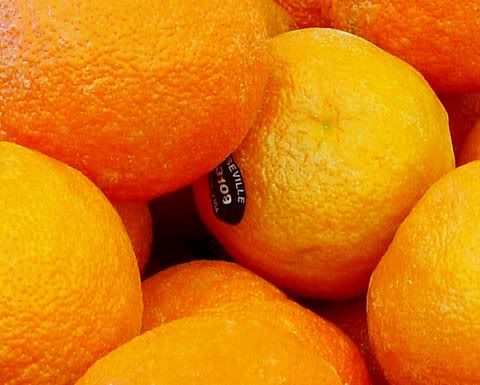
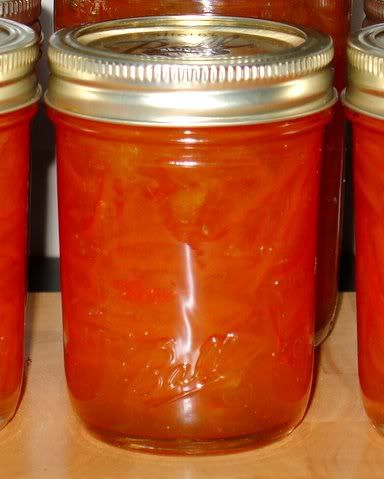
Went looking for Bergamont sour oranges and found not only them, but Seville sour oranges too. They taste like sour tangerines or mandarin oranges. Here's my take on a traditional orange marmalade. Sevilles are so full of pips that using their pulp was almost impossible and much too much work, so I compromised. I used their juice, skins, and added large navel oranges for pulp and juice.

Ingredients:

10 large Seville oranges
2 large navel oranges
5 1/2 cups of sugar

Directions:

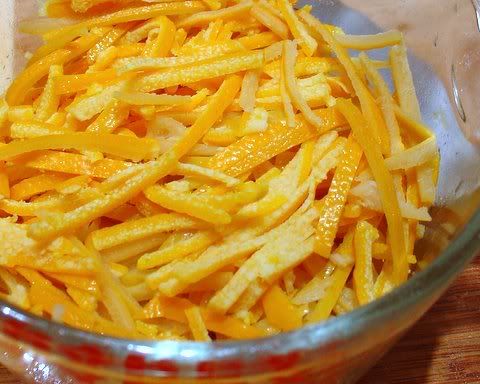
Peel the Seville oranges and boil the skins for 45-60 minutes, then scrape off the pith and slice the peels very thin. While the peels are boiling, strain as much of the orange juice as you can from the oranges and use the juice and pulp from the navel oranges as well, removing as much of the membranes and pith as you can. Combine the slivered peels with the juice and pulp and measure, then place in a nonreactive stockpot while you measure out an equal amount of sugar. Add the sugar to the oranges over a high heat and stir until you get the marmalade to a rolling boil stage, then place in sterilized jars to can.

This recipe makes 3 1/2 pints of marmalade

Bergamont and Blood Orange Marmalade

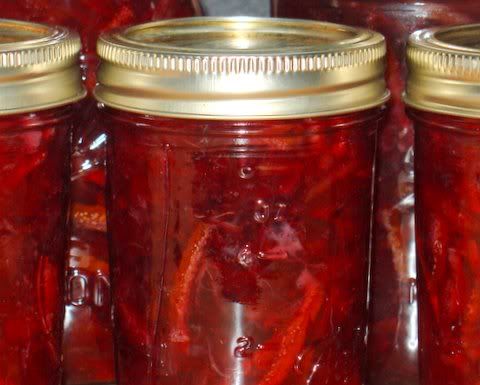
Last year at this time I found Bergamont sour oranges. Even though I do not like to drink Earl Gray tea, I do love the smell, so I bought the oranges and made a marmalade with them. It was delicious, but I never wrote down the recipe (back to my old bad habits). I used blood oranges with them and this recipe is my attempt to recreate that success. I added a vanilla bean, but that was the only change I made.


Ingredients:

5 Bergamont oranges
8 blood oranges
7C sugar
1vanilla bean
3/4C water
1/2 pkg pectin

Notes:
Because the marmalade was more peel than pulp, the sugar was not melting into the juice. Fearful that it would caramelize or burn I made the executive decision to add the water and therefore the pectin too, which you may or may not need. Rule of thumb on marmalade is to measure the fruit and use an equal amount of sugar, so adjust your sugar. I would never have used the pectin in a marmalade without having added the water. A note on another recipe stated that I used 5 Bergamont oranges to 2 blood oranges in my first Bergamont and Blood Orange marmalade. Now I'm interested in comparing the two.
Directions:

Peel the fruit and boil the rinds for 60 minutes. Remove pith, seeds and sections from the fruit, and add the pulp and juice together into a large measuring cup. When the peels have finished boiling, scrape the pith from them and slice as thin as possible, placing the sliced peels into the measuring cup also. Place fruit pulp and peels into a nonreactive sauce pan and bring to a boil.

Add an equal amount of sugar to the fruit and stir, bringing to a boil over high heat. I added the water when I could see that the sugar was not melting down in the juice, but saved the pectin until the end of this process. Bring the preserve to a rolling boil, stir until you cannot calm the boiling bubbles and place into sterilized jars for canning. Please see "Canning Made Simple" under the heading Preserves for a detailed description of the canning process.

This recipe makes 3 1/2 pints of marmalade

Saturday, January 19, 2008

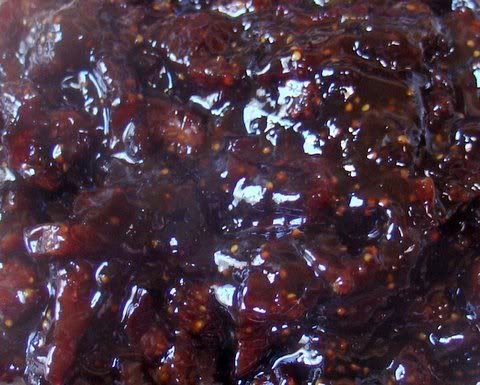
Balsamic Fig Jam

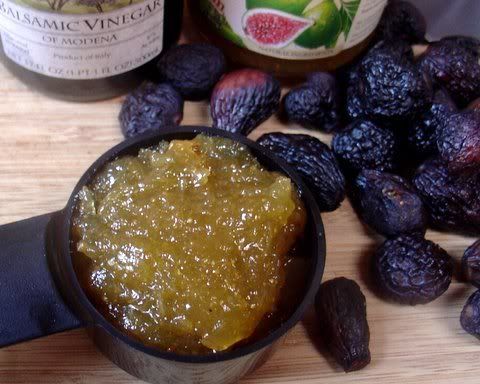
This jam is made fresh but I may try canning it in the future. It works well with both meats and cheeses as a condiment. My inspiration came from a pizza I had eaten at Fig's in Boston. It had gorgonzola and dried figs that had been plumped in balsamic, as well as prosciutto. I dare say this might be nice on a grilled ham and cheese sandwich too. I'll have to try that one of these days.

Ingredients:

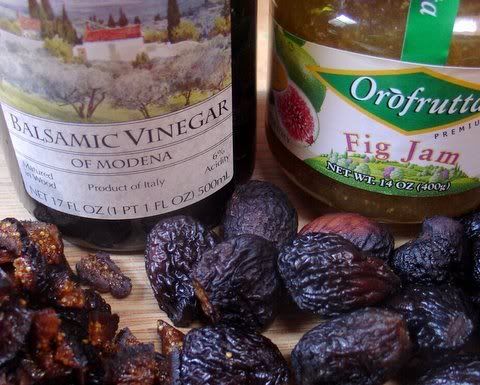
8 oz. dried Mission figs
1/2C balsamic vinegar
1/3C fig jam

Directions:

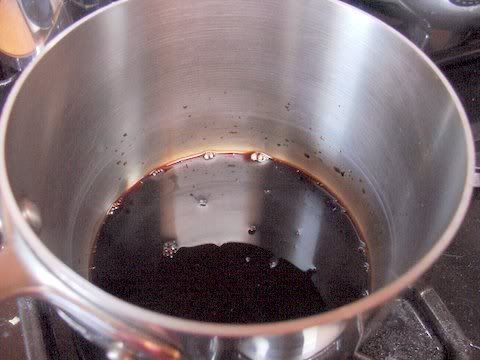
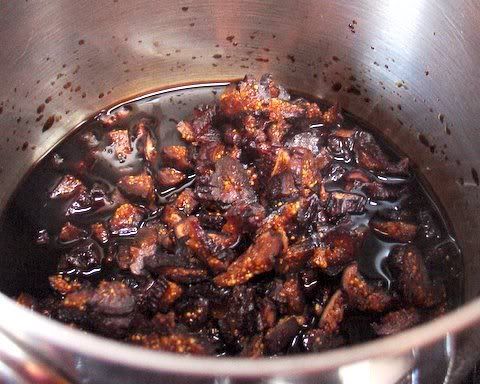
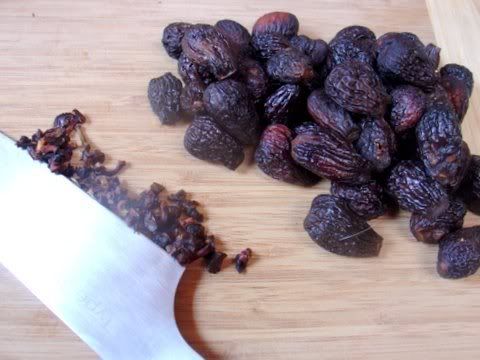
Stem and chop the figs. I use a very fine dice when making this for use in appetizers, but if it accompanies duck or pork a rough chop would work well. Simmer the balsamic and add the figs.

After the figs have cooked down a bit and the balsamic is being absorbed into them, add the comercially prepared jam and continue cooking down over a very low flame until a nice thick consistancy is achieved. Cool down and use. Refrigerate afterwards and it will last for months, although I would suggest that it be used within one month.